Maritime Security Crisis and Naval Special Forces Interventions
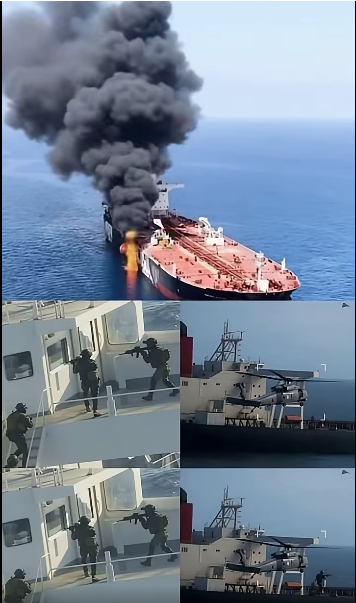
The global maritime community recently witnessed a dramatic escalation in international waters as a major oil tanker became the target of a severe security incident. In the striking visual evidence captured from the scene, a massive commercial oil tanker is seen heavily damaged and actively burning out at sea. Billions of dollars in global trade rely on these specific shipping lanes, making any threat to commercial vessels a matter of extreme international concern. A thick, billowing column of pitch-black smoke rises hundreds of feet into the clear blue sky, signaling a catastrophic breach of safety. Flames are visibly erupting from the port side near the superstructure of the vessel, suggesting a high-impact explosion or a targeted kinetic attack. The sheer volume of smoke indicates that highly flammable petroleum products or heavy ship fuel have ignited, posing a monumental environmental and logistical disaster. This critical situation immediately triggered a coordinated emergency response from nearby naval coalitions and specialized maritime defense units. While the burning vessel struggled to maintain buoyancy, heavily armed special operations forces were deployed to secure the area and assess the ongoing threat. Split-screen footage reveals tactical operators clad in full combat gear boarding an adjacent naval vessel to establish a secure perimeter. These elite commandos are equipped with advanced assault rifles, tactical helmets, and body armor, reflecting the high-stakes nature of modern maritime interdiction. Moving with synchronized precision, the soldiers navigate the narrow corridors and open decks of the ship to neutralize potential hostile actors. Their presence suggests that the incident may involve piracy, state-sponsored sabotage, or an ongoing boarding crisis that requires immediate military resolution. Another angle of the footage displays a military helicopter positioned on the flight deck of a supporting warship, ready for rapid medical evacuation or air support. The strategic placement of these naval assets emphasizes the complex, multi-domain approach required to handle modern maritime security emergencies. Such volatile events underscore the extreme vulnerability of international shipping chokepoints and the critical importance of naval readiness. Experts suggest that a failure to protect these vital transport routes could lead to soaring oil prices and severe disruptions in global supply chains. Consequently, international naval task forces continuously patrol these high-risk zones to deter asymmetric threats and guarantee freedom of navigation. The immediate priority in this specific operation is to suppress the raging fire while ensuring the complete safety of the civilian crew trapped onboard. Special forces must work under immense pressure, balancing the tactical threat of potential secondary attacks with the physical hazards of an exploding ship. Environmental protection agencies are also on high alert, as a major oil spill from a damaged tanker of this size could devastate marine ecosystems for decades. The burning vessel appears to be a modern double-hulled tanker, which fortunately provides some structural resilience against total cargo containment failure. However, prolonged exposure to extreme thermal energy can weaken steel bulkheads, leading to catastrophic structural collapse. Salvage tugs and specialized firefighting vessels are being dispatched to the location to assist the naval forces in cooling the hull. Meanwhile, military analysts are meticulously reviewing the tactical footage to determine the exact origin of the attack, whether it was caused by a drone strike, a naval mine, or an anti-ship missile. The presence of specialized boarding teams implies that an ongoing investigation is happening concurrently with the rescue operations. Every movement made by the commandos is calculated to minimize casualties and prevent further escalation in an already tense geopolitical environment. This dramatic event serves as a stark reminder of the perpetual dangers faced by merchant mariners who navigate contested waters daily. As the black smoke continues to dominate the horizon, international maritime organizations are calling for stronger legal frameworks to punish perpetrators of high-seas aggression. The successful resolution of this crisis depends entirely on seamless communication between multinational naval command centers and private shipping companies. Increased surveillance, satellite tracking, and onboard security detachments are becoming standard requirements for vessels transiting these perilous trade routes. As the tactical operators complete their sweep of the vessel, the focus will inevitably shift toward long-term salvage and comprehensive damage control. Ultimately, this intense maritime incident highlights the indispensable role of naval special forces in maintaining global stability and protecting the economic lifebloods of our interconnected world.