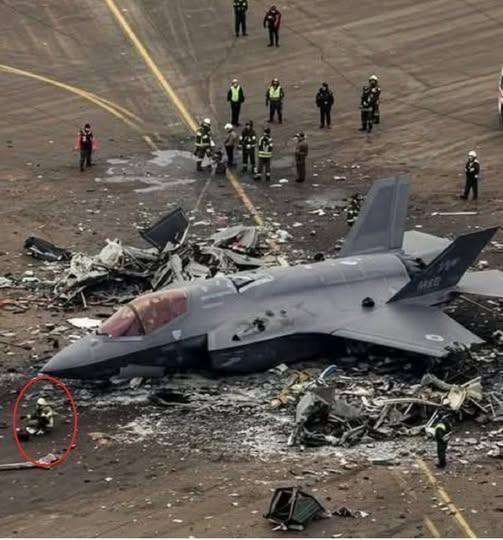
The sudden and dramatic crash of an advanced stealth military fighter jet on the tarmac serves as a stark reminder of the inherent risks associated with high-performance aviation operations and modern defense technology. In the immediate aftermath of the devastating incident, the fuselage of the state-of-the-art aircraft rests heavily on the concrete runway, surrounded by a chaotic field of pulverized debris and shattered structural components. Emergency response teams and specialized military personnel quickly swarmed the site of the accident to secure the perimeter, assess the damage, and ensure that no lingering fires or hazardous chemical leaks posed a threat to the base. A dedicated firefighter clad in protective gear can be seen kneeling near the nose of the plane, carefully examining the wreckage for any signs of immediate danger or trapped personnel while other crew members coordinate their recovery efforts nearby. The intense scene highlights the critical importance of rigorous safety protocols, rapid emergency deployment, and thorough investigation procedures following any major aviation mishap. Such catastrophic events trigger immediate and comprehensive investigations by aviation safety boards to determine whether mechanical failure, pilot error, or environmental factors contributed to the destruction of the multimillion-dollar asset. The sheer volume of scattered metal and torn carbon-fiber panels underscores the immense kinetic energy involved when a high-speed jet suffers a severe impact or structural failure during landing, takeoff, or ground maneuvers. Military aviation units around the world continuously analyze data from these unfortunate occurrences to update training regimens, improve aircraft maintenance schedules, and implement design modifications that enhance pilot survivability. The presence of multiple emergency vehicles and diverse ground crew members working in tandem demonstrates a synchronized response strategy designed to mitigate crises in high-stress defense environments. Every piece of debris scattered across the tarmac holds vital clues for forensic engineers who specialize in reconstructing accident timelines and identifying the root causes of structural compromises. Maintaining the integrity of the crash site is paramount for investigators who must meticulously document the position of every fragment before any cleanup operations can officially begin. The resilient design of the cockpit canopy appears relatively intact compared to the completely obliterated sections of the wings and tail, suggesting that pilot extraction systems and protective enclosures functioned as intended to safeguard human life. Aviation experts often look at the specific patterns of metal tearing and stress fractures to understand whether the airframe suffered from pre-existing fatigue or sudden, overwhelming aerodynamic forces. The financial and operational impact of losing such a sophisticated fighter aircraft reverberates through military logistics and defense budgeting, prompting strategic reviews of fleet readiness and procurement timelines. Ground crews must exercise extreme caution during the recovery process because modern military aircraft utilize specialized composite materials and radar-absorbent coatings that can release toxic particles when burned or fragmented. The collaborative effort of firefighters, security personnel, and engineering specialists at the scene exemplifies the multidisciplinary approach required to handle complex aerospace emergencies effectively. As the investigation progresses, digital flight data recorders and cockpit voice recorders will be analyzed alongside physical evidence to paint a complete picture of the moments leading up to the crash. Lessons learned from this specific incident will undoubtedly be shared across international aviation networks to prevent similar occurrences and to protect the lives of brave pilots who operate these powerful machines. The somber atmosphere on the runway reflects the gravity of the situation, yet the efficient and focused actions of the first responders demonstrate the high level of professionalism embedded within military emergency services. Despite the technological advancements that define modern warfare, the unpredictability of mechanical systems and human factors ensures that aviation safety remains an ongoing, evolving challenge for air forces globally. The wreckage itself becomes a temporary classroom where engineers study the limits of material science and structural engineering under extreme, real-world duress. Moving forward, the site will be meticulously cleared, the runway repaired, and the surrounding airspace reopened, but the data gathered during this intensive recovery operation will influence aviation safety standards for years to come. Every safety briefing, pre-flight check, and maintenance inspection will be viewed through the lens of this event to reinforce the absolute necessity of perfection in aerospace operations. The dedication of the ground team working diligently under challenging conditions ensures that even in the face of destruction, the path to understanding and improvement is swiftly established. Ultimately, the goal of every air crash investigation is to transform a tragic loss into actionable knowledge that fortifies the safety, reliability, and resilience of future aviation endeavors worldwide.