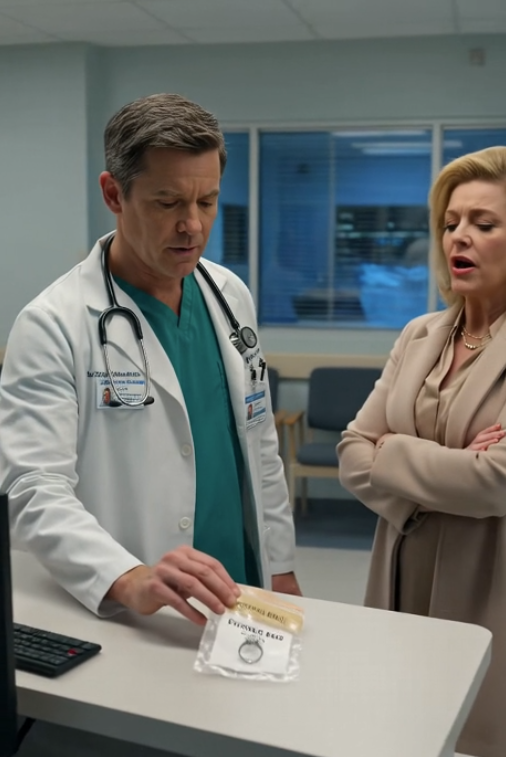
The compelling scene unfolds in a sterile, modern hospital corridor bustling with administrative and medical staff. A male doctor clad in green scrubs and a white lab coat serves as the focal point, holding up a small plastic evidence bag with a yellow label. This clear bag contains a piece of evidence that appears to be central to the ongoing discussion among the group. Standing behind the doctor, a security officer in a blue uniform keeps watch, adding a sense of official gravity to the confrontation. The doctor places the bag deliberately onto the counter in front of an elegant woman with blonde hair wrapped in a beige coat. She stands with her arms crossed, her expression serious as she participates in the intense conversation. Two nurses in light blue scrubs watch the exchange with concerned and intent expressions from the background. The scene cuts to show a broader group of observers, including two individuals in professional gray and dark suits. A man in a sharp blue suit carrying a briefcase walks into the frame, exuding a business-like authority. He addresses the gathered crowd with a confident gesture, altering the room’s dynamic immediately. The doctor looks on with a steady and intense gaze, his focus unwavering as the discussion continues. The office setting features crisp lighting, clean linoleum flooring, and standard clinical office desks equipped with computer monitors. A sign labeled “NURSES STATION” is visible on the wall behind the main group, anchoring the location. The dialogue between the characters remains tense, suggesting a serious administrative or legal challenge within the medical facility. The background characters maintain a professional demeanor, their eyes shifting between the doctor and the corporate officials. The sleek design of the hospital corridor enhances the dramatic and realistic tone of this dramatic television scene. Every character’s posture and facial expression reflect the high stakes of the situation at hand. The man in the blue suit speaks with a commanding tone, drawing all eyes to him as he lays out a proposal or a declaration. His confident body language contrasts with the anxious or defensive stances of the medical personnel. The camera utilizes medium shots and close-ups to capture the nuanced emotions of each participant in the meeting. The lighting is uniform and bright, typical of a professional medical environment during daytime operations. The blonde woman in the beige coat nods subtly, processing the information being presented by the corporate visitor. The two nurses remain close together, providing a silent chorus of concern for the staff’s perspective. The security guard remains stationary, an imposing figure of enforcement standing by the doorway. The scene seamlessly blends elements of medical drama with legal or corporate intrigue to captivate the audience. The doctor’s firm stance suggests a strong commitment to his patients or a specific ethical position. The corporate figures represent an external authority, creating a compelling conflict between administration and frontline healthcare. The dialogue flows smoothly, building tension as the character in the blue suit drives the narrative forward. The subtle sound of hospital machinery and quiet background chatter adds to the authenticity of the setting. The visual composition emphasizes the division between the hospital staff and the visiting executives. The crisp focus on the evidence bag earlier highlights its continued importance to the plot. The characters interact with clear purpose, making every line of dialogue feel impactful and necessary. The man with the briefcase gestures to emphasize his points, commanding the room’s full attention. The general atmosphere shifts from tense confrontation to a structured corporate briefing as the scene progresses. The doctor’s expressions remain guarded, indicating a skepticism toward the proposed changes or statements. The elegant woman listens carefully, her crossed arms softening slightly as the conversation turns. The surrounding environment remains organized, with clinical charts and office supplies neatly arranged on the desk. The scene captures a realistic slice of institutional politics within a large-scale healthcare system. The narrative pacing is steady, allowing viewers to absorb the conflict and understand the various perspectives. The characters’ attire clearly defines their roles, from the frontline scrubs to the executive suits. The interaction highlights the complexities of managing a modern hospital under external scrutiny. The scene concludes with a sense of unresolved tension, setting up further dramatic developments. The high-quality production values are evident in the crisp audio and sharp visual presentation throughout the clip. This segment effectively engages the viewer by highlighting a dramatic clash of ideals in a familiar setting. The overall presentation is polished, delivering a gripping moment of television drama that feels both authentic and intense.