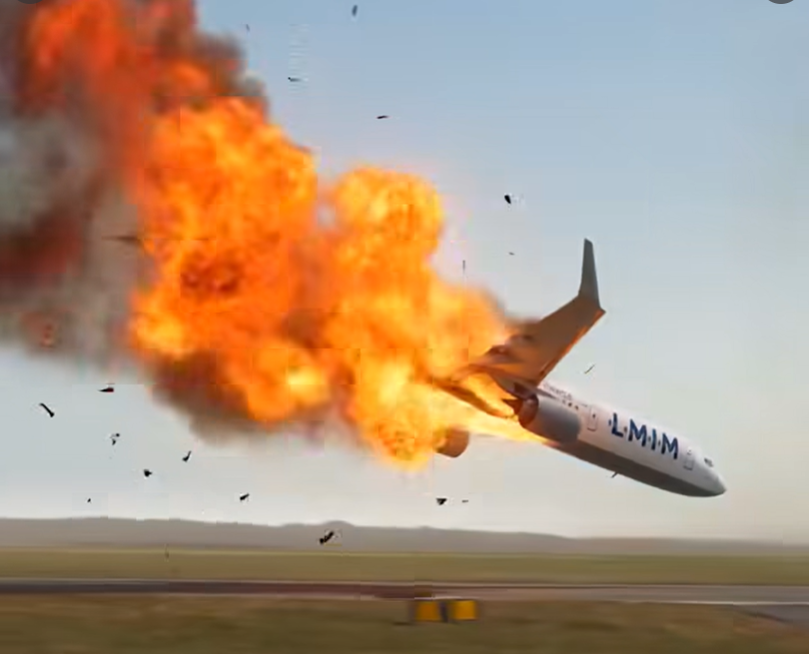
Aviation safety and catastrophic aircraft incidents represent some of the most critical challenges in modern transportation history. When a large commercial airliner experiences a sudden, catastrophic failure in mid-air, the consequences are invariably devastating for everyone involved. The terrifying reality of a major plane crash is vividly demonstrated when a passenger jet suffers a massive explosion while airborne. In such dire scenarios, a sudden blast near the wing or fuselage can immediately compromise the structural integrity of the aircraft. As seen in the shocking footage, the violent mid-flight explosion causes the plane to lose control and plummet rapidly toward the earth. The aircraft, bearing distinct markings, is consumed by an intense fireball even before it makes impact with the ground. Witnesses to these horrifying aviation disasters are often left in absolute shock as they watch the doomed vessel descend. Reports indicate that a major aircraft incident involving more than 244 passengers on board has occurred near a local airport. Emergency ground crews and airfield first responders are instantly placed on high alert as they brace for a catastrophic impact. The physics of high-speed aviation crashes mean that the kinetic energy released upon hitting the runway results in total destruction. Upon impacting the ground, the remaining fuel tanks ignite instantly, creating an apocalyptic fireball that engulfs the entire wreckage. Thick columns of toxic black smoke billow high into the sky, visible from miles away across the surrounding landscape. Specialized airport firefighting units rush to the scene with heavy foam-suppression vehicles to combat the raging inferno. Search and rescue operations are initiated immediately, though the intensity of the flames makes initial access nearly impossible. Aviation authorities and federal investigators are quickly deployed to the crash site to secure the area and locate the flight data recorders. The black boxes, which contain vital cockpit voice recordings and flight telemetry data, are essential for reconstructing the final moments of the flight. Investigating teams must meticulously analyze the debris field to determine whether the initial explosion was caused by mechanical failure or external factors. Modern jet engines are engineered to withstand extreme conditions, making a sudden inflight explosion a rare and deeply concerning anomaly. Airline companies and regulatory bodies continuously review safety protocols to minimize the risk of such structural breaches during commercial travel. The emotional impact on the families of the victims and the broader community is profound, sparking widespread grief and demands for answers. Air traffic control logs and communication tapes are carefully reviewed to understand the final interactions between the pilots and the tower. Ground radar data provides a precise timeline of the aircraft’s altitude, speed, and trajectory leading up to the violent impact. Public anxiety regarding flight safety often spikes following a highly publicized and visually dramatic aviation disaster. Despite the dramatic nature of these rare accidents, statistical data consistently demonstrates that commercial aviation remains one of the safest modes of transportation. Stringent manufacturing standards, rigorous pilot training, and routine maintenance schedules are designed to prevent catastrophic failures in the sky. When an unexpected system failure does occur, the primary objective of the flight crew is to execute emergency landing procedures safely. However, when a massive explosion destroys critical control surfaces, even the most experienced pilots face an insurmountable challenge. The secondary explosions at the crash site present extreme hazards for the first responders attempting to extinguish the flames. Forensic specialists work tirelessly under difficult conditions to identify the remains of those who perished in the tragedy. Global aviation networks often face immediate disruptions, with flights diverted and schedules altered following a major runway incident. Structural engineering flaws, fuel system vulnerabilities, and engine maintenance history are all heavily scrutinized during the official probe. The manufacturing company of the commercial airliner often cooperates fully with international safety boards to inspect similar models worldwide. News outlets globally broadcast the shocking imagery of the burning wreckage, emphasizing the scale of the humanitarian tragedy. Community support centers and crisis counselors are rapidly mobilized to assist grieving relatives during the agonizing waiting period. The economic fallout for the involved airline can be substantial, encompassing legal liabilities, fleet groundings, and brand damage. Technological advancements in real-time telemetry streaming could eventually supplement traditional black boxes to provide instant data during crises. Future aircraft designs continue to focus on enhancing fuel tank protection and developing superior fire-retardant materials for passenger cabins. Every major accident report yields critical safety recommendations that help reshape global aviation laws and manufacturing guidelines. The dedication of the firefighting personnel who battle these massive airfield infernos highlights the heroism inherent in emergency services. Environmental teams are also dispatched to the crash scene to manage hazardous fuel spills and mitigate soil contamination. As the fire is gradually brought under control, the true extent of the structural devastation becomes painfully clear to onlookers. Pieces of the fuselage, wings, and tail section are scattered across a wide radius, requiring a systematic recovery effort. International aviation security protocols are reviewed to ensure that no security lapses contributed to the onboard detonation. The resilience of the aviation industry is tested during these dark moments, driving a collective commitment to absolute safety. Lessons learned from past tragedies have directly contributed to the highly sophisticated safety redundant systems built into modern jets. Public trust in air travel relies heavily on the transparency and thoroughness of the subsequent accident investigation. Final reports detailing the root cause of the explosion can take months or even years of painstaking laboratory analysis to complete. Memorials are often erected at or near the crash site to honor the lives lost in the devastating operational event. The haunting image of the airplane exploding mid-air serves as a permanent reminder of the immense responsibilities borne by aviation operators. Ultimately, the continuous pursuit of technological perfection and uncompromising safety standards remains the ultimate tribute to those affected by aviation disasters.